
An asteroid changed Earth 66 million years ago. Follow the evidence, explore the food-web problem, and meet the dinosaurs still here.
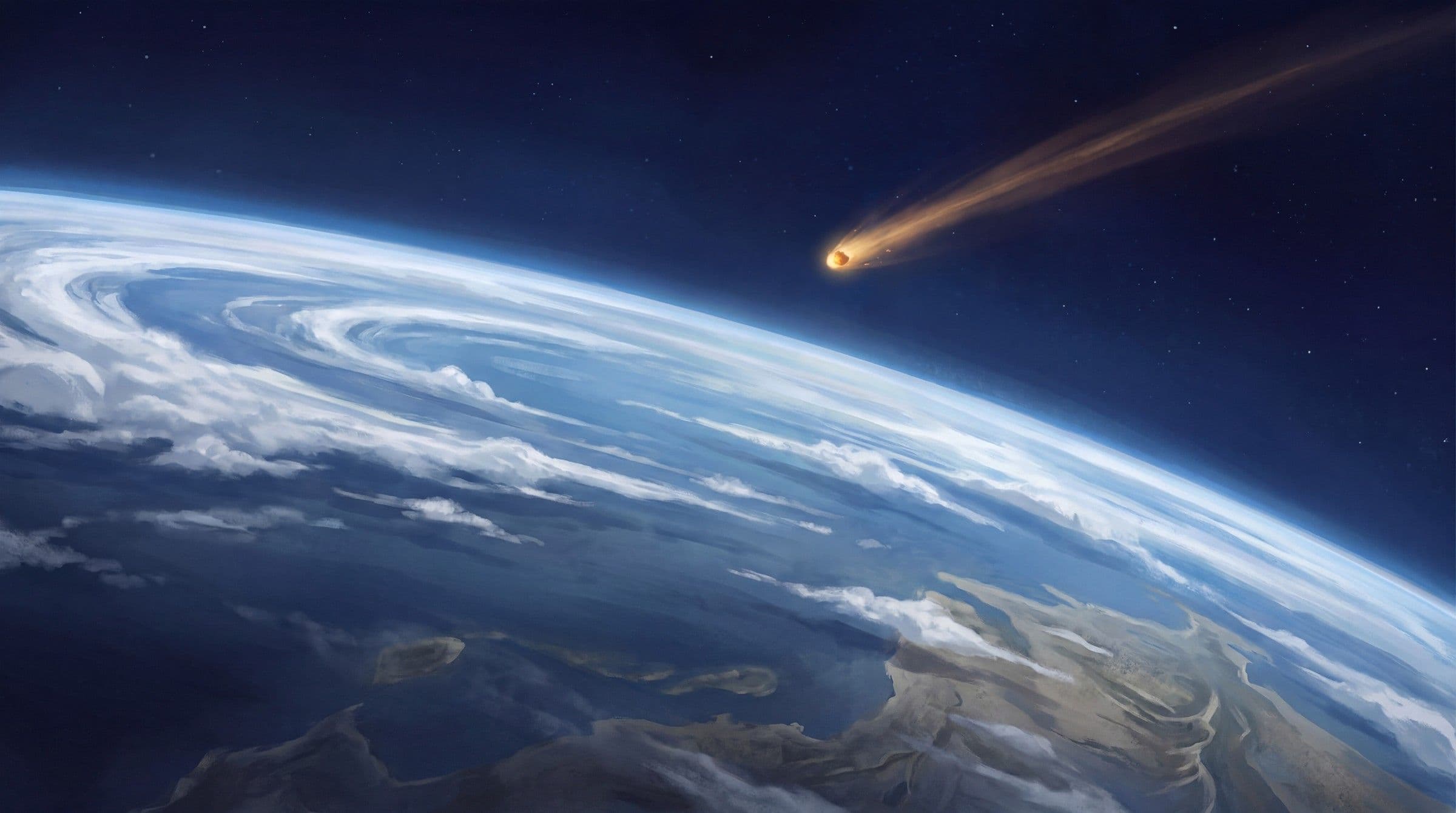
AI reconstruction · DinoFacts / Google Gemini
“The dinosaurs disappeared” sounds like the end of a story. But listen for a bird outside. Birds are living dinosaurs, part of the same family tree. The extinction story needs an important extra word: the non-bird dinosaurs disappeared.
About 66 million years ago, at the end of the Cretaceous Period, a mass extinction changed life on Earth. Tyrannosaurus and Triceratops were among the dinosaurs lost. Some bird lineages survived, although many ancient birds also went extinct.
A large asteroid struck Earth in the region of today’s Yucatán Peninsula, Mexico. The buried impact structure is called Chicxulub. Its age matches the end-Cretaceous extinction.
Scientists also find a distinctive layer in rocks far from the crater. It contains unusually high amounts of iridium, an element that is relatively abundant in many meteorites but rare in Earth’s crust. The crater and evidence preserved across the world strongly support the asteroid impact as the main cause. This is much more than a guess inspired by a dramatic film.
The impact devastated the nearby area. But its global effects help explain why animals far away also disappeared. Material thrown into the atmosphere reduced sunlight reaching the surface and changed the climate.
Plants and other organisms that use sunlight struggled. Animals that depended on them then had less food, and predators lost food too. A food web connects many lives, so trouble can spread through it. The extinction was not simply every dinosaur being struck by flying rocks at the same instant. The Natural History Museum explains the impact and its consequences.
Large volcanic eruptions in what is now India were also changing the environment around this time. Researchers investigate how these conditions interacted with the impact and how different ecosystems responded.
Questions remain about the timing and importance of particular effects. That does not make every suggested explanation equally strong: evidence for the impact is robust. The museum’s extinction overview introduces the wider scientific discussion.
Not every famous dinosaur lived at the very end. Stegosaurus had disappeared millions of years earlier. Nor did all life vanish: surviving lineages included birds, mammals and many other groups.
Draw a plant, a plant-eating insect and an insect-eating bird. Add arrows showing food passing from one to the next. This is a simple example, not a reconstruction of one particular ancient ecosystem.
Now cover the plant with a piece of paper. How might the other two be affected? What other foods could help them? Add a second food connection and discuss why more information matters.
Finally, look at a bird today. It is not a tiny T. rex. It belongs to the dinosaur branch that survived and continued to evolve.
Explore dinosaur stories and expeditions in My Museum.
Discover more stories about dinosaurs, fossils and research.
Back to the guides