
A flying reptile, a sea giant and a garden bird: which belongs in the dinosaur family? The answer may surprise you.
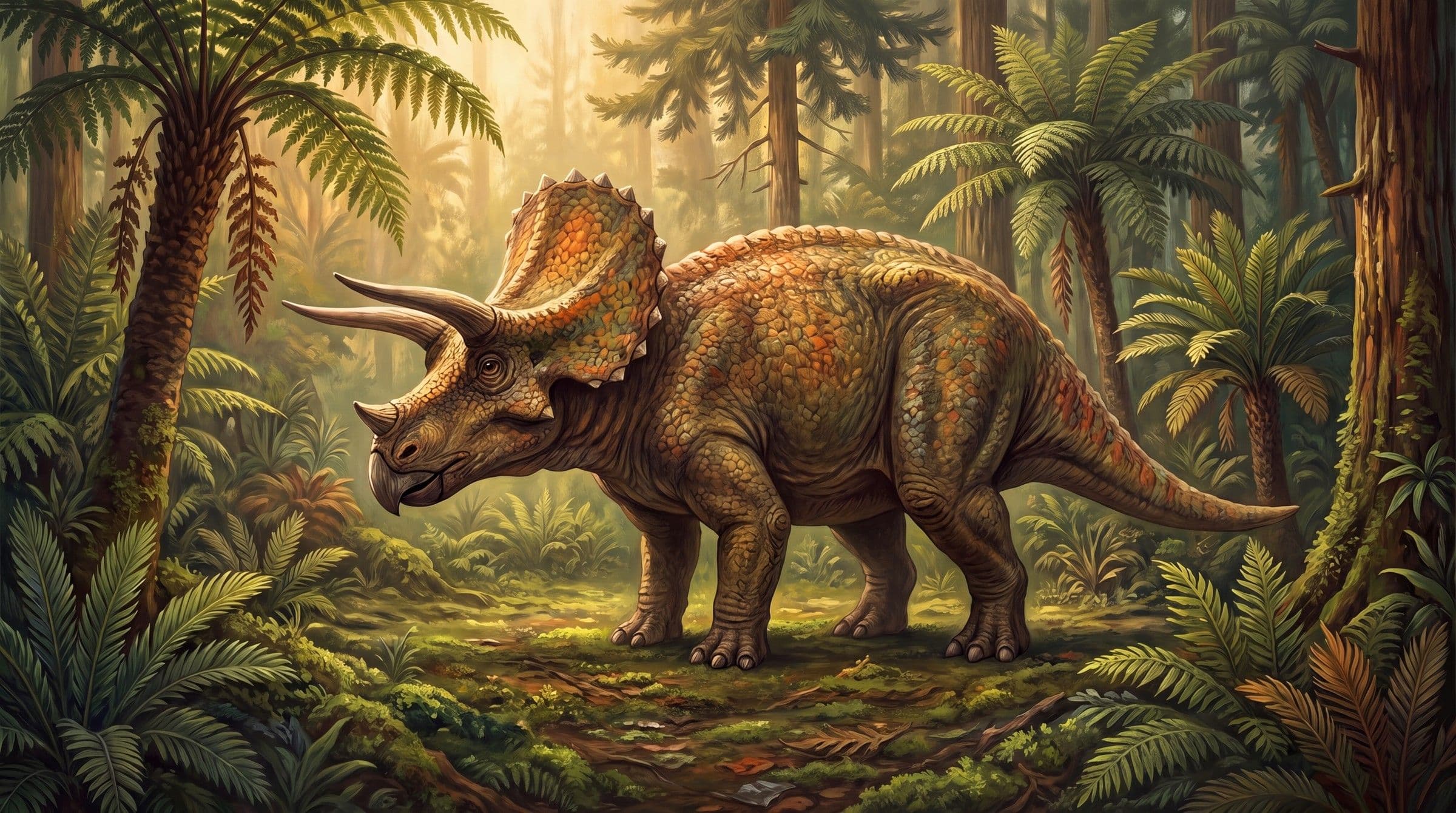
AI reconstruction · DinoFacts / Google Gemini
A huge animal with sharp teeth looks like an obvious dinosaur. A tiny bird on a fence looks like an obvious non-dinosaur. Yet size and scariness are terrible guides to this particular mystery. The bird belongs to the dinosaur family. Some of the most impressive prehistoric giants do not.
“Dinosaur” names a branch of the animal family tree. Triceratops, Velociraptor and birds belong to that branch because of their evolutionary relationships. They do not need to look alike, eat the same food or grow to the same size.
Scientists work out those relationships by comparing many features, especially bones. A useful starting clue is the way many dinosaurs held their legs beneath their bodies. Picture the difference between a dinosaur standing over its feet and a lizard with legs spreading out to the sides.
But one clue is not a complete identification test. An animal does not become a dinosaur simply by standing upright. Scientists examine combinations of features and shared ancestry. The Natural History Museum’s dinosaur introduction explains the distinction.
Pterosaurs were flying reptiles, but they were not dinosaurs. Plesiosaurs, ichthyosaurs and mosasaurs were marine reptiles from other groups. Living alongside dinosaurs did not make them members of the same family.
Nor does a movie appearance settle the question. “Prehistoric animal” is a much wider description than “dinosaur”. It covers animals from different groups and many different times. A toy collection can mix all of them together; a scientific family tree keeps track of their relationships.
Birds evolved within a group of dinosaurs called theropods. That makes birds living dinosaurs, rather than animals that stopped being dinosaurs when they gained wings.
A pigeon is not descended from Tyrannosaurus rex. Their branches share ancestors further back in the family tree. T. rex is more like a distant relative than a featherless grandparent. Read the museum’s explanation of surviving dinosaurs.
Write “Triceratops”, “pterosaur” and “sparrow” on three cards. Make two groups: dinosaurs and other animals. Then explain each choice without using “big”, “old” or “scary”.
Triceratops and the sparrow belong together. The pterosaur goes in the other group. The important discovery is not just remembering an answer: it is learning to ask about relationships instead of appearances. Next time a strange prehistoric creature catches your eye, ask: which branch does it belong to?
Explore dinosaur stories and expeditions in My Museum.
The cover is an AI illustration. Colours, soft tissues and scenery are reconstructed, not direct fossil evidence.
Discover more stories about dinosaurs, fossils and research.
Back to the guides